

lordstanley
-
Posts
10,181 -
Joined
-
Last visited
-
Days Won
28
Content Type
Profiles
Forums
Events
Blogs
Store
Articles
Everything posted by lordstanley
-
Sabres, Habs, Bruins, Jackets all win. Penguins tie game in final minute and head to OT. NYI ties their game after trailing by 2. About as bad as it gets.
-
Wings surge into Panthers end with 23 seconds to go, 4 skaters well inside the blue line, needlessly exposed.
-
Inexcusable to not at least protect a tie.
-
This is a game that kills a season.
-
Omg, Panthers lead? Challenge?
-
Ugh, Panthers tie it with their goalie pulled.
-
Sabres winning. Habs winning. Lightning losing …but bad because it means Columbus is winning. Bruins winning.
-
Florida 2 Detroit 2, 15 minutes left in 3rd period
-
MBN back out for 3rd period.
-
-
Didn’t look good.
-
Take a Super Bowl contending team, subtract Ragnow and Joseph and Branch and put a big question mark around #1 pick Arnold. That's a significant challenge to overcome. The other stuff can be patched up by replacing bodies with bodies.
-
Kings win in OT. Jackets are 5 back of Detroit with only 1 game in hand now. Sens, 8 back with 2 games in hand, are in town to play the Canucks tonight.
-
Of course Columbus ties it up with 2 minutes to go.
-
Columbus trailing LA Kings by a goal but the Jackets are heading to a powerplay with 3 minutes left in the 3rd.
-
Oops! Too easy to mix up Detroit sports teams that stumble down the stretch.
-
Sens are 8 points behind the Tigers with 2 games in hand.
-
This is hilarious. I guess it came down to Hronek, Boeser or an orca. The Orca won.
-
LOLegionnaires? No, that's not our Major Junior team, which is the Sarnia Sting. It's a Junior B team but has a long history going back decades with a fair bit of success. Not sure what brought them to this state. 0-50-0. https://www.ctvnews.ca/london/article/sarnia-legionnaires-lose-final-game-to-finish-season-with-0-50-record-in-gohl/
-
3-0 victory! Stops the bleeding, for now.
-
For sure, love to see it for him.

-
Pens come back to beat the Bruins in OT so the Wings are 1 point ahead of Boston through 63 games. Wings hold the 1st wildcard spot currently, the Bruins hold the 2nd wildcard spot.
-
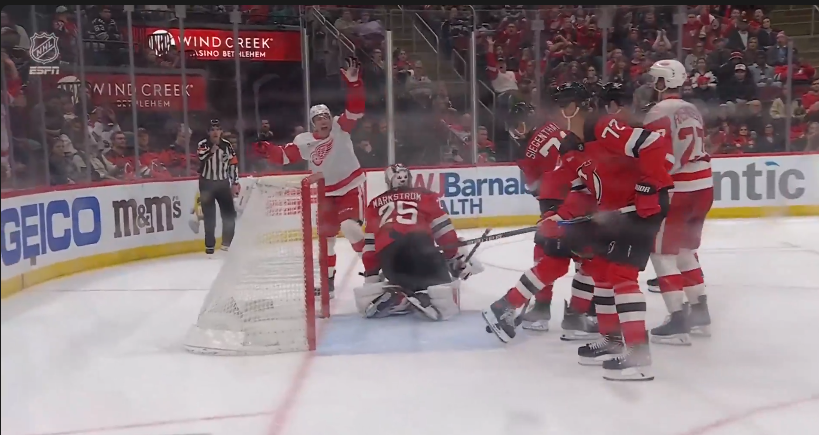
Arguably the biggest game of the year so far. Mo gives the Wings an early 1-0 lead in Jersey.
-
So the 2019 pick of Soderblom can be considered a success for a 6th rounder. Played almost 100 games in the NHL for the Wings in parts of three season and then was traded for a 3rd that was a piece in the trade for a top 4 defenseman. Only six other 6th rounders from that draft (and three 5th rounders and eleven 4th rounders) made the NHL at all, only one of whom has played more NHL games than Elmer.
-